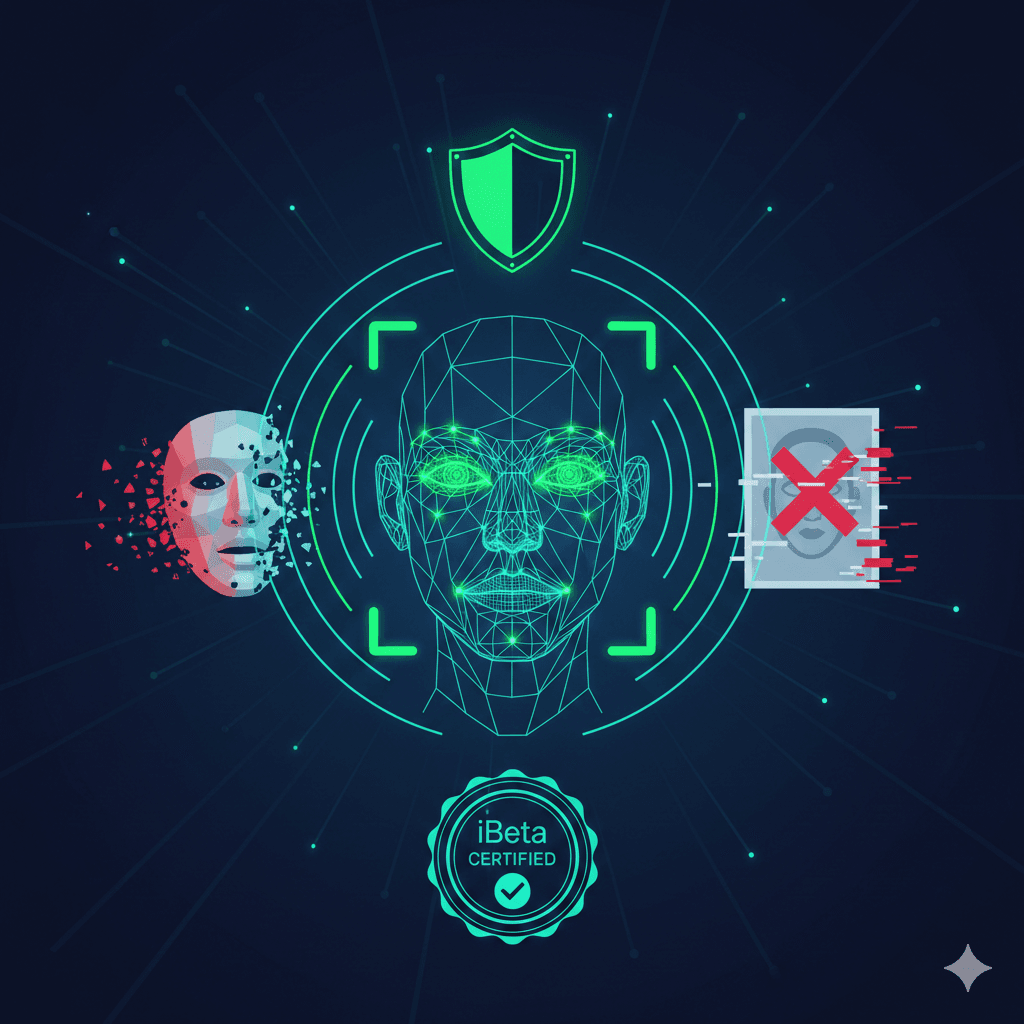
In the digital age, to check that a person claims to be isn't enough. We also have to confirm that that person's physically present during the check. That's where life proof or liveness detection enters, a critical technology in the fight against identity fraud.
What's liveness detection?
Liveness detection (liveness detection) is a biometric technology designed to determine whether the biometric sample captured comes from a living and present human being, rather than a false representation as:
- Printed or on-screen photographs
- Unrecorded videos
- 2D or 3D masks
- Deepfakes and digital manipulations
- Silicone or latex models
Important date:
Without liveness detection, a facial recognition system can be misled simply by showing a photo of the legitimate headline. That makes liveness technology necessary for any remote verification process.
Types of presentative attacks
Attempts at biometric fraud are classified as follows:
2D attacks
- • Paper printed photos
- • Images on device screens
- • Videos reproduced on screen
- • photo cuts with mobile eyes
3D attacks
- • Silicone or latex masks
- • 3D printed models
- • Realist feature mannequins
- • Sophisticated facial protheses
Active Liveness detection vs. Passive
There are two main approaches to detecting a living person:
1Active Liveness detection
It requires that the user conduct specific actions with respect to the camera:
- • Blow your eyes
- • Turn your head to different directions
- • Smile or make facial expressions
- • Following an on-screen item with the look
- • Read numbers or words out loud
2Passive Liveness detection
Analyzes features without requiring user actions:
- • Natural microexpressions
- • Involuntary blink patterns
- • Skin texture and reflections
- • Facial depth and three-dimensionality
- • Visible blood lung (pg remote)
The certification iBeta: The gold standard
iBeta Quality Assurance is the world's leading laboratory for biometric technology testing.PAD) is recognised as industry standard.
What does certification mean? iBeta Level 1 and Level 2?
Test with 2D attacks
Printed and digital photographs, on-screen videos
Test with 3D attacks
Latex masks, silicone, 3D models printed
Certification requires a 100% attack detection rate with no significant false positive that affects legitimate users.
ISO 30107-3: The normative framework
Test iBeta following the standard ISO/ IEC 30107-3, which lays down:
- ACER (Attack Presentation Classification Error Rate): Percentage of attacks that aren't detected
- BPCER (Bona Fide Presentation Classification Error Rate): Percentage of legitimate users rejected
- PAI (Presentation Attack Instrument): Special types of tested attack tools
Technologies after Liveness detection
Modern living systems use multiple technologies:
Texture analysis
Detects differences between actual skin and flat surfaces as paper or screens
3D Mapping
Builds a three-dimensional model of the face to detect flat objects
Reflection analysis
Examines how light is reflected in the eyes and skin
Detection of deepfakes
AI algorithms that identify digital manipulations and synthetic videos
Remote PPG
Detects blood lung through subtle changes in skin color
Why Liveness detection Is Critical to Your Business
Implement liveness detection isn't just a security measure but a strategic business decision:
- Loan prevention: Suppelling fraud can cost millions in direct losses and reputiation damage
- Regulatory compliance: Financial authorities increasingly demand more and more robust biometric controls
- Customer confidence: Users appreciate knowing their accounts are protected
- Cost reduction: Automate fraud detection reduces manual review
Case of use: Opening remote accounts
When a user opens an account from his cell phone, his or her liveness detection:
- Check that the person in front of the camera's real, not a photo
- Confirms that it matches the photo on the identity document
- Realizes that a prerecorded or deepfake video isn't being used
- All this in seconds, without friction for the legitimate user
Choosing a Liveness detection solution
When evaluating providers, it considers these factors:
- Certificates: Search certification iBeta Level 1 and Level 2, compliance with ISO 30107-3
- Type of detection: Preferably passive or hybrids for best user experience
- Speed: The check should be complete in seconds, not minutes
- Compatibility: It should work with different devices and light conditions
- Continuous update: The supplier should constantly update against new threats
Conclusion
The liveness detection is no longer optional in digital identity monitoring. with an increased number of increasingly sophisticated deepfakes and fraud techniques, living with certified liveness detection is the only way to secure that you are checking out real people. Investment in this technology is paid with the first significant fraud prevention.